I'm pleased to formally post the cast list for Seascape:
Charlie: John Honeycutt
Nancy: Julie Oliver
Leslie: Ryan Brock
Sarah: Samantha Corey
I am really honored to be working with such a strong group of actors. The fact that such great people are putting their trust in me as a director/co-producer fills me with pride. I know this show will be great already.
Someone asked me what I'd be doing as a director. With this cast... basically trying to stay out of their way! I look forward to helping craft the play, asking questions, helping the actors make choices that are clear and consistent, helping them find the reality of their characters in their physical and vocal performance. But mostly, yeah, I'll be a resource for support and an extra set of eyes.
When he directed me in Earnest, Jack Hall made the observation that "theatre is an actor's medium, film is a director's medium" and that statement is quite true. In film, a director can choose which camera angle to use. Which take, which performance. Sometimes directors will film rehearsal and use that (because they feel the spontaneity of the performance is important). Sometimes directors will shoot a scene 40 or 50 times (Kubrick had a reputation for doing this). Through the use of editing and selection, the director can really control the performance and the choices in film. The pace, the tone, even the meaning of the scenes can really be altered by the choices made in the editing room. In theatre, it's very much the opposite. You can work and work a piece, you can prepare an actor, you can discuss motivation, objectives, personality, choices, etc for weeks. But when the curtain goes up, those choices belong to the actor. The actor has to be completely comfortable in the character and just be. And that's not something the director can control. You have to prepare with the actors, and then give them control. Ultimately, it's about trusting each other's vision, understanding and art. Which is why I'm really looking forward to working with such a talented cast.
I'm really looking forward to this show. You should be too.
Saturday, October 5, 2013

Thursday, July 4, 2013
Seascape
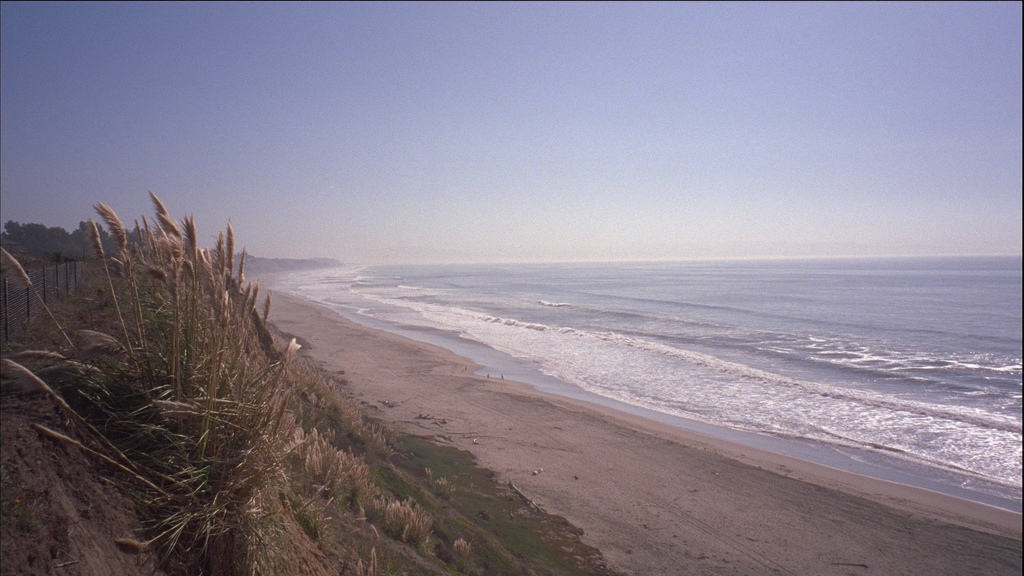
We'll be announcing a bunch more stuff as planning progresses. We're six months out, so we are in the very beginning of the planning process. There will be lots of details coming. Hopefully as we go through the process we'll talk some about costumes (there's an interesting costume challenge with this one) and set (yeah, we'll need more than 3 chairs this time), and other stuff. We will be running a kickstarter campaign again to pre-sell tickets and (if you're so inclined) get your name in the program. Maybe even some other goodies.
But that stuff is in the future. Right now, I wanted to let people know that we have the rights to the show, and we're about to finalize the venue contract, and it looks like it's going to happen, so I want to start getting the word out there. I'm already planning, reading, planning, reading.... The more I read this script, the more I just love it. So put it on your calendar, coming, in January 2014, let's go to the beach!
photo by jimg944, used under creative commons liscense
Friday, June 14, 2013
In Memory of Eugen Merzbacher
I wanted to take a moment to recognize the passing of our friend Eugen Merzbacher last Thursday, June 6.
He was the advisor for our production of "Copenhagen." He and his wife Ann were most kind to us. They invited John and I to their home and told us stories of meeting Niels and Margrethe Bohr during their year at the institute. They provided us with biographical material, and even shared pictures with us. It was such a thrill to talk to people who actually knew the people involved in our story, and Eugen literally wrote the book on quantum mechanics. Eugen and Ann's kindness and assistance brought a richness to our production that we would not have had otherwise. We will miss Eugen and our thoughts and prayers are with Ann.
He was the advisor for our production of "Copenhagen." He and his wife Ann were most kind to us. They invited John and I to their home and told us stories of meeting Niels and Margrethe Bohr during their year at the institute. They provided us with biographical material, and even shared pictures with us. It was such a thrill to talk to people who actually knew the people involved in our story, and Eugen literally wrote the book on quantum mechanics. Eugen and Ann's kindness and assistance brought a richness to our production that we would not have had otherwise. We will miss Eugen and our thoughts and prayers are with Ann.
 |
| John Honeycutt, Eugen Merzbacher, and Brook North |
Friday, June 7, 2013
On Race
Oh good, a white guy talking about race. Clearly there's not enough of that on the internet (and cable tv, and ...). What could possibly go wrong?
So I saw Once on This Island last night at RLT. I am not a big musical theatre person but it was nice. The woman who played the Mother Earth goddess was ridiculous good, and over all the songs were catchy and the dancing was pretty tight for a community theater production (with a couple real stand-outs). But... It was white. Very white.
Ok, so if you're not familiar with the story, check out the wikipedia page. The entire show takes place on Haiti, and the central conflict revolves around the racial politics of the island, and the separation between the peasants who are "black as night" and the grande hommes who are mulatto, being mix-race descendants of the former French colonialists (Beauxhomme, the male lead/object of privilege is described as having skin "the color of coffee with cream"). This racial dynamic is not only important to the plot, but it seems kind of important to the message of the play too. That the people of Haiti, after staging the only successful slave rebellion in history, managed to re-create a cast system based primarily on racial lineage which they had just rejected. The grande hommes culturally aspire to be French (sending their children to expensive French schools) while they are still not considered French by the French. They still suffer rejection because they reach out toward their former colonial state for cultural validation rather than embrace the peasant culture (from which they are also descended). This is particularly brought to the fore in the ball scene where Ti-Moune performs a peasant dance at the grand ball which connects with the audience of grande hommes who had previously been dancing in European style. The rejection of peasant culture as "low" and the raising up of European culture as "high" and the parallel dynamic in skin tone are prominent themes in the piece.
In this casting, well, all the grande hommes and a number of the peasants are white, as is the goddess Erzulie (goddess of love). And that's... well it's challenging. When I saw the cast in the opening number I thought "uh oh." I mean, it's tricky right?
Lemme back up. One of my earliest experiences with theatre was playing "Phra-Alack" in the King and I. Now, the King and I is, quite obviously a play set in another specific cultural place, Thailand (Siam in the play). And my character was "Phra-Alack." And if you know me, you know I'm about the whitest white boy around (back then I even had blonde hair to go with the blue eyes). Now the production was in San Rafael, California, across the Golden Gate from San Francisco, but even there, there were very few Asians in our cast (hmm parallels?). That meant... well it meant hair dye and makeup (yep, I'm pretty sure we were in yellow face, at least we had eye makeup) for a bunch of little kids, and ad-lib Thai language (yes, I just made shit up that sounded Asian... hey, I was like, 9 or 10 or something). Looking back, I feel a little embarrassed, but also, it was a lovely show. Really. A lovely script and I was enthralled by the older (what, probably high school aged looking back) performers. And I'm glad that people didn't look at the show and go "well, we'll never get enough Asians to come out for this, let's do My Fair Lady instead."
It's not necessarily a bad choice. On one level, well, you cast who auditions for your show. Shows that tell stories from other perspectives are really important. This is a good story with really fun music, why shouldn't we do it? If casting white people in Once on This Island lets you produce the show, if it gets the story told, well then good! If you have auditions and few performers of color show up, do you cancel the show? That seems worse to me. We shouldn't shy away from telling these stories because we feel uncomfortable playing people of a different race or background. If anything, we need to seek out MORE voices and themes from different perspectives. Heck, that's part of what makes theatre valuable. The ability to relate to other people, to empathize. Putting on the mask of another culture or experience helps us (and hopefully our audience) realize the basic commonality of experience we share as humans. We live in story and hearing someone else's story makes us realize that. Should people in upstate Minnesota never produce this lovely show because of the casting? How much poorer would we be if we felt that way?
But, but but... Well, the flip side of this is that we're not exactly in Minnesota are we? If RLT did the King and I they're gonna have to cast lots of non-Asians, but Raleigh is 29% African American, Durham is 43.8% African American. Why wasn't the talent pool of available people deep enough that you could cast it, well at least somewhat more racially appropriately?
Now there are a couple explanations for this. First of all, it's poor coordination. Justice Theatre Project is about to open Ragtime, another show that calls for a large African American casting. I know there are a number of performers in Ragtime who would have loved to play roles in this show (and would have been great) but you can't be in two places at once. Coordination is a persistent problem in the triangle (IMHO as an audience member). Last season we were treated to two productions of Next to Normal and two productions (one weekend simultaneously running) of The 39 Steps. This season it looks like we'll get two productions of The Tempest plus one more Tempest-themed show. I don't know why but this tends to happen. It would have been nice, as an audience member, if JTP and RLT had found a way to let me see people shine in both productions. And the overlap, well at a certain point maybe you just run up against supply limitations.
I also feel that there's a larger issue. I see it more in some groups than in others, but I will say in general, theatre around here tends to be pretty white. I noticed this especially with the Durham Savoyards, a group that produces an annual Gilbert and Sullivan musical in Durham. Durham is basically half black. There are almost no African Americans in their company. That's just ... well it's odd. Don't mistake me, I think they're great folks, and I honestly think their process is race blind (as much as that is possible for any human). Their auditions are always open calls and I am sure they would happily cast talent no matter what their race in any role. It's not a matter of being racist, or not being welcoming. I think it's more a matter of not reaching outside of your regular channels for talent. It just seems like an annual theatre production with open casting in a community like ours, well if there are very few African Americans in it, there must be a problem somewhere right? It's much easier to post the audition announcement in the Indy and on your website and then just sit back and see who shows up. But ultimately you aren't engaging new audience, and you probably aren't getting the best people on stage. If your population is half black and you have one person in a twenty person cast that is black, well, I'm pretty sure you don't have the best possible actors for your show, just based on math. Finding a way to reach out to new communities would broaden the audience and produce better shows. Outreach also means, if you're serious about it, casting all your shows in a more race blind manner. If your African American performers know that the only character they can audition for in "The Crucible" is Tituba, well, they're not going to come out for that. And maybe the next show too, and by the time you want them, they're not part of your community any longer. You can't do "ok this is our large black cast show" once every two years and call that outreach and inclusiveness. There's nothing wrong with casting white people in Once on This Island as long as you're casting black people (and Asians etc) in Oklahoma.
There probably are larger issues of race and privilege at play here. I'm not going to say a lot about that because, well I don't have a lot of personal knowledge or information, so anything I say is pretty speculative, but theatre means having free time that you can give, and paying for gas to get back and forth, and, especially for musical theater, paying for and attending training like dance classes and voice lessons. And there probably are some cultural issues too: that theatre is seen as culturally "white" because so much of our "classic" theatre is ... well it's written by white men and so from a white male perspective, and is typically performed with white casts. Now that doesn't need to be a barrier (James Earl Jones recently played Big Daddy on Broadway), but it can be, and, especially for people just getting into theatre, I suspect the voice of many plays being one of privilege, is a barrier.
All this being said... the cast does a great job. Maybe RLT could do a better job with outreach, but ultimately that's down to the company management, not the director or his cast. And I wanted to say that they played it correctly. They were admirably clear in who they were, and the script and the song supports that. Admittedly it was odd watching a blond haired, fair skinned Hatian love goddess sing about love conquering a racial divide between two people who were, well, not very racially divided. But once you get into it, it isn't a barrier to enjoyment of the piece, and the cast did an admirable job of just presenting their characters with conviction in movement and voice. As an audience member, the cast did not leave me questioning their choices or the show, but the casting in general, and what it says about the theatre community in the triangle, raises issues that can't (and shouldn't) be ignored.
So I saw Once on This Island last night at RLT. I am not a big musical theatre person but it was nice. The woman who played the Mother Earth goddess was ridiculous good, and over all the songs were catchy and the dancing was pretty tight for a community theater production (with a couple real stand-outs). But... It was white. Very white.
Ok, so if you're not familiar with the story, check out the wikipedia page. The entire show takes place on Haiti, and the central conflict revolves around the racial politics of the island, and the separation between the peasants who are "black as night" and the grande hommes who are mulatto, being mix-race descendants of the former French colonialists (Beauxhomme, the male lead/object of privilege is described as having skin "the color of coffee with cream"). This racial dynamic is not only important to the plot, but it seems kind of important to the message of the play too. That the people of Haiti, after staging the only successful slave rebellion in history, managed to re-create a cast system based primarily on racial lineage which they had just rejected. The grande hommes culturally aspire to be French (sending their children to expensive French schools) while they are still not considered French by the French. They still suffer rejection because they reach out toward their former colonial state for cultural validation rather than embrace the peasant culture (from which they are also descended). This is particularly brought to the fore in the ball scene where Ti-Moune performs a peasant dance at the grand ball which connects with the audience of grande hommes who had previously been dancing in European style. The rejection of peasant culture as "low" and the raising up of European culture as "high" and the parallel dynamic in skin tone are prominent themes in the piece.
In this casting, well, all the grande hommes and a number of the peasants are white, as is the goddess Erzulie (goddess of love). And that's... well it's challenging. When I saw the cast in the opening number I thought "uh oh." I mean, it's tricky right?
Lemme back up. One of my earliest experiences with theatre was playing "Phra-Alack" in the King and I. Now, the King and I is, quite obviously a play set in another specific cultural place, Thailand (Siam in the play). And my character was "Phra-Alack." And if you know me, you know I'm about the whitest white boy around (back then I even had blonde hair to go with the blue eyes). Now the production was in San Rafael, California, across the Golden Gate from San Francisco, but even there, there were very few Asians in our cast (hmm parallels?). That meant... well it meant hair dye and makeup (yep, I'm pretty sure we were in yellow face, at least we had eye makeup) for a bunch of little kids, and ad-lib Thai language (yes, I just made shit up that sounded Asian... hey, I was like, 9 or 10 or something). Looking back, I feel a little embarrassed, but also, it was a lovely show. Really. A lovely script and I was enthralled by the older (what, probably high school aged looking back) performers. And I'm glad that people didn't look at the show and go "well, we'll never get enough Asians to come out for this, let's do My Fair Lady instead."
It's not necessarily a bad choice. On one level, well, you cast who auditions for your show. Shows that tell stories from other perspectives are really important. This is a good story with really fun music, why shouldn't we do it? If casting white people in Once on This Island lets you produce the show, if it gets the story told, well then good! If you have auditions and few performers of color show up, do you cancel the show? That seems worse to me. We shouldn't shy away from telling these stories because we feel uncomfortable playing people of a different race or background. If anything, we need to seek out MORE voices and themes from different perspectives. Heck, that's part of what makes theatre valuable. The ability to relate to other people, to empathize. Putting on the mask of another culture or experience helps us (and hopefully our audience) realize the basic commonality of experience we share as humans. We live in story and hearing someone else's story makes us realize that. Should people in upstate Minnesota never produce this lovely show because of the casting? How much poorer would we be if we felt that way?
But, but but... Well, the flip side of this is that we're not exactly in Minnesota are we? If RLT did the King and I they're gonna have to cast lots of non-Asians, but Raleigh is 29% African American, Durham is 43.8% African American. Why wasn't the talent pool of available people deep enough that you could cast it, well at least somewhat more racially appropriately?
Now there are a couple explanations for this. First of all, it's poor coordination. Justice Theatre Project is about to open Ragtime, another show that calls for a large African American casting. I know there are a number of performers in Ragtime who would have loved to play roles in this show (and would have been great) but you can't be in two places at once. Coordination is a persistent problem in the triangle (IMHO as an audience member). Last season we were treated to two productions of Next to Normal and two productions (one weekend simultaneously running) of The 39 Steps. This season it looks like we'll get two productions of The Tempest plus one more Tempest-themed show. I don't know why but this tends to happen. It would have been nice, as an audience member, if JTP and RLT had found a way to let me see people shine in both productions. And the overlap, well at a certain point maybe you just run up against supply limitations.
I also feel that there's a larger issue. I see it more in some groups than in others, but I will say in general, theatre around here tends to be pretty white. I noticed this especially with the Durham Savoyards, a group that produces an annual Gilbert and Sullivan musical in Durham. Durham is basically half black. There are almost no African Americans in their company. That's just ... well it's odd. Don't mistake me, I think they're great folks, and I honestly think their process is race blind (as much as that is possible for any human). Their auditions are always open calls and I am sure they would happily cast talent no matter what their race in any role. It's not a matter of being racist, or not being welcoming. I think it's more a matter of not reaching outside of your regular channels for talent. It just seems like an annual theatre production with open casting in a community like ours, well if there are very few African Americans in it, there must be a problem somewhere right? It's much easier to post the audition announcement in the Indy and on your website and then just sit back and see who shows up. But ultimately you aren't engaging new audience, and you probably aren't getting the best people on stage. If your population is half black and you have one person in a twenty person cast that is black, well, I'm pretty sure you don't have the best possible actors for your show, just based on math. Finding a way to reach out to new communities would broaden the audience and produce better shows. Outreach also means, if you're serious about it, casting all your shows in a more race blind manner. If your African American performers know that the only character they can audition for in "The Crucible" is Tituba, well, they're not going to come out for that. And maybe the next show too, and by the time you want them, they're not part of your community any longer. You can't do "ok this is our large black cast show" once every two years and call that outreach and inclusiveness. There's nothing wrong with casting white people in Once on This Island as long as you're casting black people (and Asians etc) in Oklahoma.
There probably are larger issues of race and privilege at play here. I'm not going to say a lot about that because, well I don't have a lot of personal knowledge or information, so anything I say is pretty speculative, but theatre means having free time that you can give, and paying for gas to get back and forth, and, especially for musical theater, paying for and attending training like dance classes and voice lessons. And there probably are some cultural issues too: that theatre is seen as culturally "white" because so much of our "classic" theatre is ... well it's written by white men and so from a white male perspective, and is typically performed with white casts. Now that doesn't need to be a barrier (James Earl Jones recently played Big Daddy on Broadway), but it can be, and, especially for people just getting into theatre, I suspect the voice of many plays being one of privilege, is a barrier.
All this being said... the cast does a great job. Maybe RLT could do a better job with outreach, but ultimately that's down to the company management, not the director or his cast. And I wanted to say that they played it correctly. They were admirably clear in who they were, and the script and the song supports that. Admittedly it was odd watching a blond haired, fair skinned Hatian love goddess sing about love conquering a racial divide between two people who were, well, not very racially divided. But once you get into it, it isn't a barrier to enjoyment of the piece, and the cast did an admirable job of just presenting their characters with conviction in movement and voice. As an audience member, the cast did not leave me questioning their choices or the show, but the casting in general, and what it says about the theatre community in the triangle, raises issues that can't (and shouldn't) be ignored.
Tuesday, April 16, 2013
On Reviews
Literary criticism is not your forte, my dear fellow. Don't try it. You should leave that to people who haven't been at a University. They do it so well in the daily papers.
-Oscar Wilde, Algernon in The Importance of Being Earnest.
I just opened the The Importance of Being Earnest this weekend. That means we'll probably get reviewed this week, and it is a question that is nigh inevitable. Reviews. Good reviews, bad reviews, what do you do with them?
The best thing to do with them is ignore them. Never read them. Never discuss them. Never think about them until your show is closed. What are you going to do, change your performance? Reading praise or criticism will only serve to interfere with the process and values that you have worked so hard to create in rehearsal. What is important is your dedication to the character and your connection with the audience. If those things are real, if you are giving and receiving that energy, if you are feeling it happen, nothing else matters. And you know when you are not. Actors are so often their own worst critics. They are (as a whole) perfectionists. Tiny nuances that barely ripple in the consciousness of the audience are felt on stage. We obsess over tiny details of delivery and tone. If you are a performer, you KNOW if you had a good show. You don't need anyone to tell you. Ignore what people say, trust your heart, trust your audience, and trust your fellow actors.
And if you can do that... well you're a stronger man or woman than I.
I read them. I am almost obsessive about reading reviews, both mine and those of other shows. I want to know what someone is saying about me, particularly when they are doing so in public. Why? Well, because I'm human. Every person wants other people to say nice things about them. It's part of our DNA. Our instinct for the social and the collaborative enabled us to survive and spread as a species and in societies. I also want a good review because reviewers are audience members. I genuinely want to connect my performance with each person in the room with me. I want them to smile and laugh with me, to feel want and tension with me; I want them to share the story I'm telling. And a reviewer is part of that audience. Part that goes and writes about it after, but no less a part. Now in a 300 seat theater, someone, probably several someones, will not like your show. They have a cold or didn't get enough sleep or they were dragged there by their significant other and they just want to leave. You hope you can touch these people. You imagine, as a performer, they will come in disgruntled, but be so overwhelmed by your honest, entertaining performance that they can't help but be moved to laughter and tears. By the end of the show they will stand up spontaneously in applause, having forgotten their initial reticence, wrapped up in the moment that you have created with them. But... well that just ain't gonna happen to everyone. Sorry. Someone is going to hate your show (here are some one star reviews of Citizen Kane). And some of them are going to write about it in public. Accept it and move on with your life.
I suppose I also want a good review because it can drive ticket sales, though that's probably a smaller concern. You want people to come and enjoy your show, and the more people the better. But word of mouth (particularly social media now) is a much bigger factor. But on the margins, some people will be persuaded by reviews, and that's especially true of print publications. Say what you want about the death of newspapers, but many people, and especially older people (you know, the ones that vote and go to theatre in disproportionate numbers), still rely on them for information and advice. They also bring with them some sense of legitimacy (sometimes justified and sometimes not). But the main thing is, people do think "hmm, what's going on this weekend?" and pick up the paper or log on to its website. A good review might mean that they decide to come see your show instead of another, or going to a movie, or what have you. The dedicated theatre fan will look at the online only publications directed at theatre and the arts, but the casual fan, the type that is most likely to be persuaded by a review, is probably not reading those.
Don't get me wrong, I do think critics, no matter where or how they publish, are important. They are a record. They hold productions, and especially theatre companies to account. They are a needed part of the conversation, and without them the theatre communities aren't pushed to grow and improve. It is interesting to see the show from a different perspective. Part of theatre is thinking about it, arguing about it, even if it only consists of yelling at the computer screen. Theatre can become lazy, ossified, safe without someone willing to stand outside the production circle and voice their opinion. Art can't thrive on praise alone. But neither do we produce works for the praise of critics.
So the main thing is, if you do read them (and I do) what do you DO with them? How do you deal with them? Well, you do have to put them in a box. Remind yourself that this is just one person in your audience. If they gave you a bad review, but the audience gave you a standing ovation, who are you going to believe? Not everyone will connect with every piece or every performance, so let it go. But the flip side is important too. If they gave you a good review, don't break your arm patting yourself on the back. It's just ONE person. If you credit the good words of critics, you also give power to their negative ones, so be careful about the good words as much as the bad ones. Sure, maybe you can use a good notice to help get another part, but don't believe it, believe your performance. Second, either way, remind yourself of the reviews you have read (good and bad) that you've disagreed with. Remember when they loved the show you hated? Remember when they panned the show that made you cry? I almost never agree with every reviewer (almost never 100% agree with anyone about anything, that's human nature). When they write about a show I've seen and I disagree, I don't think "oh, well maybe I'm wrong." I don't question my judgement or belief in art. I think "that reviewer is wrong." So don't give a reviewer's opinion more weight than you would if you had watched the show. Finally, remember that what matters is the performance. What matters is the choices you worked on for weeks before you opened.
I want every review to be glowing. I want each one to mention my performance particularly as gifted, inspired, genius, and moving. Because I'm vain. Because I'm petty. Because I'm human. But the truth is... well the truth is on stage. It's what you give and what you receive. It is being there with your fellow performers and the audience as fully present and as fully invested as you can be. We are a society, a species, of story. Sharing story is as old as human language. We sit around the campfire and tell tales of gods, tricksters, heroes and devils. We share values, loves, beliefs through story. We even make decisions through story. Now the campfire consists of fresnels and par cans, but the process, the basic human need to share stories with each other, is the same. Keep that feeling. Be with your audience. And know you are doing it right.
Friday, April 5, 2013
Give Yourself Permission to Suck
The hardest thing about writing is writing.
-Nora Ephron
I've been writing. Mostly 10 min plays, with one long term project possibly. And right now I'm not writing.
Well I'm writing about writing, but I'm not writing the writing that I was going to be writing. Instead I'm writing about not writing that writing to inspire me to write. Got it?
Anyway, I wanted to talk about a problem I have with writing, and hopefully a bit about how I try to deal with it. It's about why I don't write, or haven't written before, or maybe find it hard to write on occasion. It's the fear of sucking. The fear that it will sound all wrong or just not come out right or the premise itself is stupid.
Honestly, that may be the biggest challenge to all art. In fact, that may be the challenge of art at all. Being brave enough to be honest. Writing is the process of telling a story. Of taking nothing but the ideas most important to you, and creating something new in the world. And when you expose the ideas you most cherish, the thoughts or themes or stories that were so important to you, well, you expose a very important part of yourself to ridicule. You risk hearing that it was terrible. You risk having something you wholly created mocked or found lacking. But if you don't try, if you don't put everything you have, you want into it, it will never turn out right. In fact, it will never be.
Anyway, these feelings of self-doubt can be such barriers. They can stop us before we ever start. They can kill the thought before it gets to the pen. And sometimes, you just have to look at yourself and say: I give you permission to suck. You want this idea to come out. And it might be ugly, and it might be stupid, and it might never amount to anything, and that's OK. Just write that idea in your head, and if it sucks, that's just fine. No matter how bad it is, no matter how crude, just write. Put it down on paper. Let it be sucky. But just do it.
This doesn't always lead to brilliance. Almost never does. But it does lead to writing, and that's the first step. Often it turns out much better than you feared. Sometimes, the problems you were worried about before you started, that make it "impossible" work themselves out during the writing. The solutions materialize through the characters. And sometimes... not. Sometimes it's just not very good. Sometimes you do just put it into deep storage. But that's ok. You wrote. You got closer. And from those attempts, you can some times see how to structure the story. How to express the idea you want. Or at least how to try again next time.
-Nora Ephron
I've been writing. Mostly 10 min plays, with one long term project possibly. And right now I'm not writing.
Well I'm writing about writing, but I'm not writing the writing that I was going to be writing. Instead I'm writing about not writing that writing to inspire me to write. Got it?
Anyway, I wanted to talk about a problem I have with writing, and hopefully a bit about how I try to deal with it. It's about why I don't write, or haven't written before, or maybe find it hard to write on occasion. It's the fear of sucking. The fear that it will sound all wrong or just not come out right or the premise itself is stupid.
Honestly, that may be the biggest challenge to all art. In fact, that may be the challenge of art at all. Being brave enough to be honest. Writing is the process of telling a story. Of taking nothing but the ideas most important to you, and creating something new in the world. And when you expose the ideas you most cherish, the thoughts or themes or stories that were so important to you, well, you expose a very important part of yourself to ridicule. You risk hearing that it was terrible. You risk having something you wholly created mocked or found lacking. But if you don't try, if you don't put everything you have, you want into it, it will never turn out right. In fact, it will never be.
Anyway, these feelings of self-doubt can be such barriers. They can stop us before we ever start. They can kill the thought before it gets to the pen. And sometimes, you just have to look at yourself and say: I give you permission to suck. You want this idea to come out. And it might be ugly, and it might be stupid, and it might never amount to anything, and that's OK. Just write that idea in your head, and if it sucks, that's just fine. No matter how bad it is, no matter how crude, just write. Put it down on paper. Let it be sucky. But just do it.
This doesn't always lead to brilliance. Almost never does. But it does lead to writing, and that's the first step. Often it turns out much better than you feared. Sometimes, the problems you were worried about before you started, that make it "impossible" work themselves out during the writing. The solutions materialize through the characters. And sometimes... not. Sometimes it's just not very good. Sometimes you do just put it into deep storage. But that's ok. You wrote. You got closer. And from those attempts, you can some times see how to structure the story. How to express the idea you want. Or at least how to try again next time.
Thursday, February 28, 2013
On Casting
No, we're not casting a new show.
John has just finished a run as Caesar. I've just started rehearsals for "The Importance of Being Earnest" at Raleigh Little Theatre. I must say, Jack in Earnest is one of those roles/shows that I would be tempted to produce myself just to do it... but it's so nice NOT to be producing it.
But auditioning (which I have done and will continue to do) made me reflect somewhat on the process, and the perspective South Stream has brought to me. If one googles "auditioning advice," "relax and be yourself" are among the banal (but true) cliches one will find on almost every list (right with "prepare" and "arrive on time"). This always felt like the height of uselessness to me. Wow thanks "relax." Ok, HOW? But... well that's the trick isn't it? After having read people for a part, having been "on the other side of the table" if you will, I understand the feeling. You want to see the absolute best that people can do. You want them to be comfortable and have fun. If someone is nervous and not giving their best performance, it might rob you of the chance to see what they can really do.
Auditions (for me anyway) are always more nerve wracking than performance. First, you are usually performing something you basically had an unlimited time to prepare, so the pressure to do it "just right" is pretty big. Secondly, you're going explicitly to be judged. You're saying "hey this is what I can do judge me and tell me if I'm good enough." It's tough, the hardest part (emotionally) of the process for me. By auditioning you are publicly admitting, announcing that you want something that someone else can give you. It's an act that gives power to another. It reminds me like nothing so much as asking for a date. And you can be rejected (probably will be in fact), and that hurts.
Having been on the other side, I really appreciate and understand that there are only so many roles to cast. Ultimately you will have to disappoint a number of people. Good people. But you really want each and every person to succeed. You really want to be entertained. You want to have a positive experience with every person that walks through the door, even though you know most of them will be disappointed. And often (hopefully) it's not that people XYZ were "bad." So often it's more a matter of "how do I see the character?" "Who will fit with the other actors?" etc... You really appreciate that there are many people who can perform a part well, but each actor will bring their own ideas, body, presence, etc to the character. And ultimately you have to choose. The person chosen isn't "better than you" (though it can feel that way), they are, without a doubt "different from you." And it's that difference, not in quality but in qualities, that one chooses from when casting.
Anyway. All this is rather long-winded but it's a way to say that having produced a show, I feel, gives me a better appreciation for the process, and a greater empathy for those conducting it. It's easier to relax when you know that they're just people with a vision, struggling to find the right people for their show. Not the BEST people, or the BEST actors, but the RIGHT actors. Being cast still feels great. Not being cast still feels bad. But as another very wise actor told me once, we get the parts we're meant to have. It really does work out. So be zen my friends. Relax in that audition (as much as you can). And let go of the idea that there's a right answer. There isn't. Just walk into that room, and be.
John has just finished a run as Caesar. I've just started rehearsals for "The Importance of Being Earnest" at Raleigh Little Theatre. I must say, Jack in Earnest is one of those roles/shows that I would be tempted to produce myself just to do it... but it's so nice NOT to be producing it.
But auditioning (which I have done and will continue to do) made me reflect somewhat on the process, and the perspective South Stream has brought to me. If one googles "auditioning advice," "relax and be yourself" are among the banal (but true) cliches one will find on almost every list (right with "prepare" and "arrive on time"). This always felt like the height of uselessness to me. Wow thanks "relax." Ok, HOW? But... well that's the trick isn't it? After having read people for a part, having been "on the other side of the table" if you will, I understand the feeling. You want to see the absolute best that people can do. You want them to be comfortable and have fun. If someone is nervous and not giving their best performance, it might rob you of the chance to see what they can really do.
Auditions (for me anyway) are always more nerve wracking than performance. First, you are usually performing something you basically had an unlimited time to prepare, so the pressure to do it "just right" is pretty big. Secondly, you're going explicitly to be judged. You're saying "hey this is what I can do judge me and tell me if I'm good enough." It's tough, the hardest part (emotionally) of the process for me. By auditioning you are publicly admitting, announcing that you want something that someone else can give you. It's an act that gives power to another. It reminds me like nothing so much as asking for a date. And you can be rejected (probably will be in fact), and that hurts.
Having been on the other side, I really appreciate and understand that there are only so many roles to cast. Ultimately you will have to disappoint a number of people. Good people. But you really want each and every person to succeed. You really want to be entertained. You want to have a positive experience with every person that walks through the door, even though you know most of them will be disappointed. And often (hopefully) it's not that people XYZ were "bad." So often it's more a matter of "how do I see the character?" "Who will fit with the other actors?" etc... You really appreciate that there are many people who can perform a part well, but each actor will bring their own ideas, body, presence, etc to the character. And ultimately you have to choose. The person chosen isn't "better than you" (though it can feel that way), they are, without a doubt "different from you." And it's that difference, not in quality but in qualities, that one chooses from when casting.
Anyway. All this is rather long-winded but it's a way to say that having produced a show, I feel, gives me a better appreciation for the process, and a greater empathy for those conducting it. It's easier to relax when you know that they're just people with a vision, struggling to find the right people for their show. Not the BEST people, or the BEST actors, but the RIGHT actors. Being cast still feels great. Not being cast still feels bad. But as another very wise actor told me once, we get the parts we're meant to have. It really does work out. So be zen my friends. Relax in that audition (as much as you can). And let go of the idea that there's a right answer. There isn't. Just walk into that room, and be.
Subscribe to:
Posts (Atom)
Announcing: Teamwork Makes the Dream Work
South Stream's next endeavor will be a staged reading of an original new script. Teamwork Makes the Dream Work by Brook North. ONE N...

-
 South Stream's next endeavor will be a staged reading of an original new script. Teamwork Makes the Dream Work by Brook North. ONE N...
 -
 Benjamin Tarleton as Hal, George Labusohr as Falstaff photo credit Elizabeth Johnson @elizjphotos Happy New Year and welcome to 2025. We h...
 -
 Citizens of Earth, South Stream Productions is proud to present it's cast for King Lear! King Lear - Julie Oliver Goneril - Maggie Lea R...